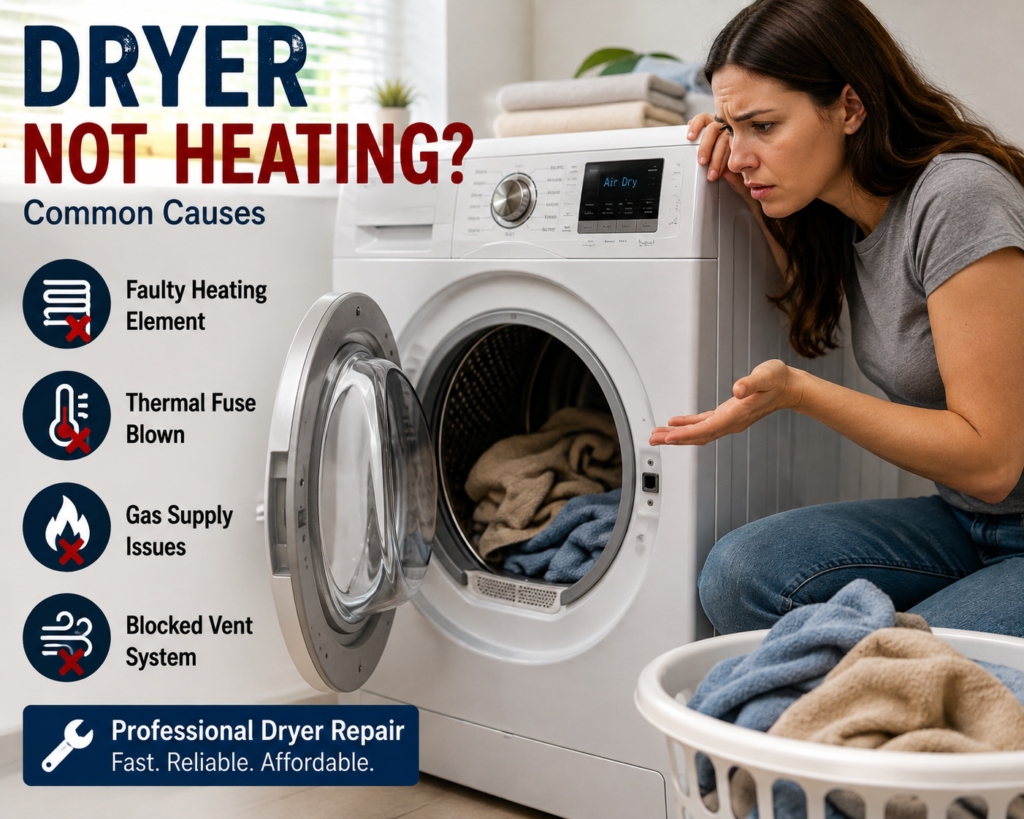
A dryer that won’t heat is one of the most frustrating appliance problems a homeowner can face. You load in wet clothes, run a full cycle, and pull out laundry that’s just as damp as when you started. If your dryer not heating has become a regular headache, you’re not alone this is one of the most common service calls appliance technicians receive every week.
The good news is that most heating issues come down to a handful of well-known causes, and many of them can be diagnosed quickly once you know what to look for. Below, we break down the five most common reasons your dryer isn’t heating, along with practical fixes for each. If the problem turns out to be electrical or mechanical, a professional Dryer repair service can safely resolve it without risking further damage to the unit.
1. Clogged Lint Filter or Exhaust Vent
The single most common cause of a dryer not heating but running is restricted airflow. Lint builds up not just in the filter but deep inside the exhaust duct that runs from the dryer to the outside vent. When airflow is blocked, many dryers trip a thermal safety fuse that cuts off heat production entirely, even though the drum keeps spinning normally.
To fix this, clean the lint filter before every load and inspect the vent hose for buildup at least twice a year. If your dryer is not drying clothes even after cleaning the filter, the blockage is likely further down the duct or at the outside exhaust cap. A full vent cleaning often restores heat immediately and also reduces fire risk, which makes this the first thing any technician checks.
2. Burnt-Out Heating Element or Igniter
Electric dryers rely on a heating element, while gas dryers use an igniter to light the burner. Over time, these parts wear out from repeated heating cycles and simply stop working. When this happens, the drum will tumble and the dryer will sound like it’s running normally, but no heat will ever be produced.
This is a classic case of dryer not heating but running, and it usually requires replacing the failed part. Because this involves working with electrical components or gas lines, it’s best handled by a licensed Dryer repair technician rather than attempted as a DIY fix, especially on gas units where safety is a real concern.
3. Faulty Thermal Fuse or Thermostat
Every dryer has a thermal fuse designed to protect the unit from overheating. Once this fuse blows, it cannot be reset it must be replaced. A blown thermal fuse is often triggered by the airflow blockage mentioned earlier, so if you’ve already cleaned the vents and the dryer still isn’t heating, this component is a likely next suspect.
Similarly, a faulty cycling thermostat can prevent the dryer from reaching or maintaining the correct temperature. Testing these parts requires a multimeter and some basic electrical knowledge, so many homeowners choose to bring in professional help rather than risk misdiagnosing the issue and buying the wrong replacement part.
4. Tripped Circuit Breaker or Power Supply Issue
Electric dryers, particularly 240-volt models, run on two separate circuits one for the motor and one for the heating element. If one of the two breakers trips while the other stays on, the drum will keep turning but the heat will disappear completely. This is a frequently overlooked cause of a dryer not heating problem.
Check your home’s electrical panel for a tripped breaker and reset it if needed. If the breaker trips again shortly after, that’s a sign of a deeper wiring issue that shouldn’t be ignored, and it’s worth having an appliance repair professional inspect the connection before it causes damage to other components.
5. Faulty Timer, Control Board, or Door Switch
Modern dryers depend on an internal control board and timer to regulate heating cycles. If either component fails, the dryer may run through a full cycle without ever activating the heating function. A faulty door switch can cause a similar issue, since some models won’t heat if the switch isn’t sending the correct signal to the control board.
These electronic issues are harder to diagnose without testing equipment and often require specialized replacement parts. A trained technician can quickly identify whether the control board, timer, or door switch is at fault and get your dryer back to full working condition.
When It’s More Than Just the Dryer
Sometimes what looks like a heating problem is tied to a bigger household appliance issue. If you’re also noticing your washer not draining, dealing with a dryer noisy during cycles, or dealing with a washer off balance, it may be worth having a full inspection done at once. A reliable Washer repair service can address drainage, balance, and noise issues in the same visit, saving you the hassle of scheduling multiple appointments.
Laundry appliances aren’t the only ones that tend to act up around the same time. Homeowners often notice a refrigerator not cooling properly or a fridge section warm right when other appliances start showing wear, especially in older homes with aging electrical systems. A dependable Refrigerator repair technician can check compressor function, coolant levels, and door seals to restore proper cooling before food spoilage becomes a bigger issue.
Kitchen appliances deserve the same attention. If your dishwasher no cleaning power has become obvious from spotty dishes, a professional Dishwasher repair visit can resolve clogged spray arms, worn pumps, or drainage issues quickly. Likewise, if your oven not heating evenly or at all, a certified Oven repair specialist can diagnose faulty igniters, heating elements, or thermostats before dinner plans get derailed. And for anyone running into uneven burner flames or a stove that won’t ignite, a trusted Stove repair service rounds out a full home appliance tune-up.
How to Decide Between DIY and Professional Repair
Cleaning lint filters, checking vents, and resetting breakers are all safe, simple tasks any homeowner can do. But once the issue involves electrical components, gas lines, or internal control boards, it’s usually safer and more cost-effective to call in a professional rather than risk voiding your warranty or causing further damage.
A qualified technician can typically diagnose a dryer not heating but running issue within minutes using proper testing equipment, something that’s difficult to replicate without experience. Scheduling a repair also protects you from repeat breakdowns, since a trained eye can often spot early warning signs of a second failing part before it leaves you without a working dryer again.
Final Thoughts
A dryer not heating is rarely a mystery once you know the common culprits: blocked vents, worn heating elements, blown thermal fuses, electrical issues, or a failing control board. Start with the simple checks lint filter, vent hose, and circuit breaker before assuming the worst. If the problem persists, a professional repair visit will save you time, money, and the frustration of running load after load of still-wet laundry.
Whether it’s your dryer, washer, refrigerator, dishwasher, oven, or stove acting up, keeping your appliances in good working order starts with catching small problems early and knowing when to bring in expert help.
Frequently Asked Questions
1. Why is my dryer running but not producing heat?
This is almost always caused by a burnt-out heating element, a blown thermal fuse, a tripped breaker, or blocked airflow from a clogged vent. The drum motor and heating system operate on separate components, so one can fail while the other keeps working normally.
2. Can a clogged vent really stop my dryer from heating?
Yes. A blocked exhaust vent restricts airflow, causing heat to build up inside the dryer. Many models have a safety thermal fuse that shuts off heat production entirely once this happens, even though the drum continues to tumble as usual.
3. Is it safe to use my dryer if it’s not heating?
It’s generally safe to run a cycle, though it won’t dry your clothes efficiently. However, if you notice burning smells, unusual noises, or excessive heat buildup around the vent, stop using the dryer and have it inspected before running it again.
4. How much does it typically cost to fix a dryer that won’t heat?
Costs vary depending on the cause. A vent cleaning or thermal fuse replacement is usually inexpensive, while a heating element or control board replacement costs more due to the price of parts and labor involved in diagnosis and installation.
5. How often should I clean my dryer vent to prevent heating problems?
Most manufacturers recommend cleaning the lint filter before every load and having the full vent duct professionally cleaned at least once a year. Homes with longer duct runs or heavy dryer use may need cleaning more frequently to prevent airflow blockages.