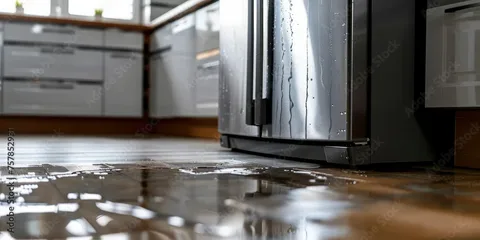
A wet patch spreading across the kitchen floor is never a welcome sight. Every fridge quietly manages meltwater, ice, and dispenser water behind the scenes, so a refrigerator leaking water simply means one part of that system has stopped doing its job. Your fridge melts frost, carries it away through a drain, and may also feed an ice maker and a water dispenser. A fault in any one of those jobs can send water onto the floor.
This guide from Rocky Mountain Appliance Repair, Inc shows you how to read the clues, match them to the likely cause, and decide what to do next.
Start With the Puddle: What Its Location and Look Can Tell You
Before you touch anything, study the water. Paying attention to the spot where water gathers, and how it appears, can lead you to the source much sooner.
- Water pooling at the front: Begin with the filter, because a cartridge that isn’t locked in properly tends to drip forward. Problems with the dispenser, a worn door seal, or a fridge that leans out of level can also push water toward the front.
- Water pooling at the rear: Inspect the supply line and the inlet valve behind the appliance. If the drain tray under the fridge fills up and runs over, that too can leave a wet patch at the back.
- Water spreading from the middle or underneath: Frequently a sign of a blocked defrost drain, so the meltwater escapes from inside the cabinet.
- Clear, clean water: Typically comes from a plumbing source, such as the supply line or ice maker feed.
- Murky or foul-smelling water: This is commonly meltwater from the defrost cycle that has run through the drain tube and collected traces of old food particles on the way.
Mop up every bit of moisture, then come back to the same area after a few hours and see if any new water has appeared. Knowing exactly when and where the water returns saves a lot of guesswork.
Clogged Defrost Drain: When Meltwater Has Nowhere to Go
Several times a day, a frost-free refrigerator switches on a small heater near its evaporator coil, which melts away the ice that has gathered there. The resulting water is supposed to flow through a slim drain tube and land in a pan under the appliance, where it evaporates. If a clogged defrost drain blocks the tube, the water backs up, spills inside the cabinet, and eventually shows up as water under fridge level.
What usually causes the blockage? Leftover food bits, torn pieces of wrapping, and water that turns back into ice within the tube most often cause the blockage. Once the tube narrows, the water slows down and freezes again, making the clog worse.
Look for these clues:
- A layer of ice on the freezer floor
- Water collecting under the produce drawers
- Frost forming on the freezer back wall
- A trickle that appears after each defrost cycle
A technician can clear the drain safely and also test the defrost heater and thermostat. Without a proper inspection, the same blockage may well form again.
Fridge Water Line Leak: The Slow Drip Behind the Appliance
If your refrigerator has an ice maker or a front dispenser, a small supply line brings water from your home plumbing. A fridge water line leak is one of the sneakiest causes because the line hides behind the unit, where a slow drip can run for days before anyone notices.
The line can fail in several ways. Shoving the refrigerator flush against the wall may kink or crack the water tubing behind it. Over the months, the fitting that secures the line may also work itself loose. The saddle valve on the wall pipe can also corrode or clog.
Warning signs include:
- Moisture on the wall or floor at the rear of the fridge
- Floorboards that appear warped or raised along the rear side
- A musty smell near the kitchen cabinets
- Dispenser water that flows weakly or sputters
If the supply line looks like the problem, shut off the water valve before doing anything else. A cracked line should be replaced rather than taped or patched, because temporary repairs tend to fail again at the worst moment.
Ice Maker Leak: Why the Problem Often Starts in the Freezer
Long before a puddle forms on the floor, an ice maker leak is often already at work inside the freezer. The ice maker depends on a fill tube, a water inlet valve, and steady water pressure. When one of them misbehaves, extra water spills over the tray, freezes into a sheet, and later melts into a puddle.
Typical causes include:
- A frozen or cracked fill tube
- An inlet valve that lets water dribble in when it should shut tightly
- Low water pressure causing slow, uneven filling
- An ice tray that isn’t seated properly in its slot
You may notice cubes fused into one lump, ice built up beneath the tray, or dripping sounds inside the freezer. As a short-term step, switch the ice maker off and empty the bin. That often stops the dripping until a technician inspects the valve and tubing.
Water Filter and Dispenser Leaks
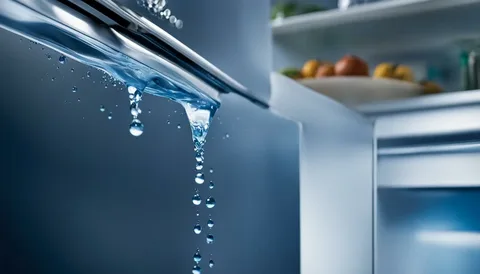
Since the filter connects directly to the fridge’s water pathway, a cartridge that isn’t seated correctly may allow water to escape. A filter that is not fully locked in, one that is cross-threaded, or a cracked filter head can all let water escape and run down the front panel.
Remove the filter, reinstall it firmly, and run a few cups of water through the dispenser to flush air from the system. Many makers suggest replacing filters about every six months. Should the leak continue after a new filter has been installed the right way, the fault likely lies in the filter housing or the dispenser tubing behind it, and that part will need fixing.
Defrost Drain Pan and Condensation Issues
Underneath most fridges sits a shallow traywhose job is to hold the defrost water while it slowly evaporates. That tray can split, shift out of place, or spill over if the fridge ends up producing more moisture than normal.
Extra moisture often comes from humid air sneaking inside. A damaged door seal allows warm room air to slip inside, and once that air touches the cold interior it turns into moisture. As a result, you might notice beads of water on the cabinet, heavier frost in the freezer, or damp patches along the door edges. In these cases the puddle is not a true plumbing leak but the result of condensation that the system cannot clear fast enough.
Wash the door seal with warm soapy water, then inspect it for cracks, stiffness, or spots where it no longer sits flush. A seal that fails to hold firmly against the cabinet can usually be swapped out at a modest cost, and a fresh one helps the refrigerator work more efficiently.
Level and Seal: Two Small Details With Big Effects
Your fridge should be balanced evenly from left to right, with a very slight lean toward the back so the doors close by themselves. If the unit leans forward or to one side, water may drift toward the front instead of the drain, and the doors may not seal fully.
Adjust the front leveling feet, then close the doors and watch how they behave. A door that swings shut smoothly is a good sign. This is especially worth checking after you have moved the fridge, cleaned behind it, or had new flooring installed.
First Steps to Take While You Wait for Repair
Acting quickly limits damage to your floors and keeps your household safe.
- Close the water shutoff valve if the fridge has an ice maker or dispenser.
- Turn off the ice maker.
- Wipe up the water so no one slips and the flooring stays protected.
- Move perishable food into a cooler if the fridge is warming up.
- Unplug the refrigerator if water is close to the cord or outlet.
Electrical safety matters more than anything else here. Never reach around a wet plug or outlet.
Mistakes That Make Leaks Worse
Some well-meant fixes cause bigger problems. Avoid these:
- Poking sharp objects into the drain tube. You can puncture or dislodge it.
- Using tape on a cracked water line. It rarely holds under pressure.
- Ignoring a small puddle. Hidden moisture can rot subflooring and encourage mold.
- Replacing parts at random. A new filter or pan will not help if the real fault is a blocked drain or a bad valve.
- Pulling the fridge out roughly. This can kink the supply line and create a new leak.
When to Call Rocky Mountain Appliance Repair, Inc
Simple leaks, such as a loose filter or an unlevel fridge, are easy to fix on your own. Anything that involves plumbing connections, electrical parts, or the defrost system is better handled by a trained technician.
Rocky Mountain Appliance Repair, Inc is a family-owned company based in Thornton, Colorado, serving homeowners across the North Denver Metro Area. Our licensed and insured technicians repair refrigerators, washers, dryers, dishwashers, ovens, and cooktops, and we stand behind every repair with a 90-day warranty on parts and labor.
Call or text 303-529-4322 or book online. We offer same-day appointments when the schedule allows and work seven days a week.
Frequently Asked Questions
Why is my refrigerator leaking water but still cooling?
The cooling system and the water system are separate. A clogged defrost drain, supply line leak, or ice maker problem can leak while cooling continues normally.
Where does water under a fridge usually come from?
Common sources are a blocked defrost drain, a loose water line, a faulty ice maker valve, or an overflowing drain pan.
Can a clogged defrost drain cause ice in the freezer?
Yes. When meltwater cannot drain, it refreezes on the freezer floor and builds up into a sheet of ice.
Is it safe to keep using a leaking refrigerator?
For a minor leak, turn off the ice maker and water supply, wipe the floor, and schedule a repair soon. Unplug the unit if water reaches any electrical connection.
Should I repair or replace a leaking refrigerator?
Most leaks come from affordable parts such as drains, filters, or valves. A technician can tell you whether repair makes sense for your fridge.